Do I Need Permission to Board My Loft? (A No-Nonsense UK Guide)
Let’s face it: as a nation, we Brits love a bit of storage. Whether it’s decades of Christmas decorations, old photo albums, or suitcases that only see the light of day once a year, our homes are often bursting at the seams. Naturally, looking up at that unused attic space seems like the perfect solution.
But before you head down to the local DIY shop and load up your boot with chipboard, a critical question arises: Do you actually need permission to board your loft?
The short answer is no—if you are only using it for light storage. However, if you plan to turn it into a shiny new bedroom or home office, the rules change entirely. Here’s everything you need to know about UK planning permissions, building regulations, and safe loft boarding.
Loft Boarding: Storage vs. Living Space
To understand whether you need the green light from your local council, you must first define exactly what you will be using the space for.
1. Boarding for Basic Loft Storage
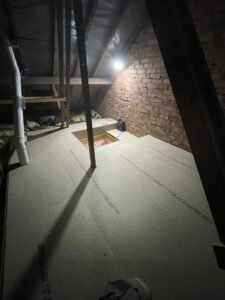
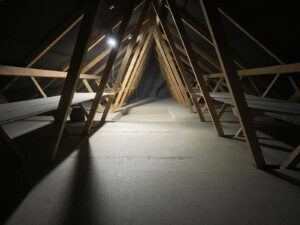
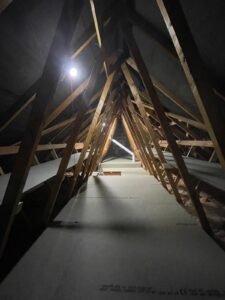
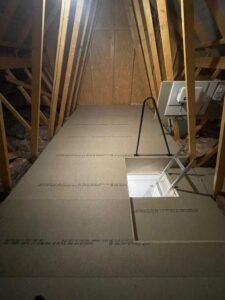
If your goal is simply to create a safe, flat platform to store lightweight household items, accessed via a standard pull-down loft ladder, you do not need planning permission or building regulations approval. In the eyes of the law, this is considered a minor home improvement. Professional loft boarding, however, ensures safety, prevents insulation compression, and keeps airflow intact.
2. Boarding for a Living Space (Loft Conversion)
If you want to put a bed up there, set up a desk, install a permanent staircase, or line the walls to create a cosy den, this officially counts as a habitable room. This is a full loft conversion, and it absolutely requires Building Regulations approval and potentially planning permission.
Warning: Trying to sneakily use a basic boarded loft as an extra bedroom without approval is a recipe for disaster. Not only is it illegal, but it can invalidate your home insurance and make your house difficult to sell in the future.
Do I Need Planning Permission for Loft Boarding?
For simple storage boarding? No. Even for a full loft conversion, many properties fall under Permitted Development (PD) rights, allowing roof space extensions of up to 40 cubic metres for terraced houses, or 50 cubic metres for detached and semi-detached homes, without a full planning application.
However, PD rights do not apply if:
- You live in a Listed Building.
- Your home is in a Conservation Area or an Area of Outstanding Natural Beauty (AONB).
- You plan to extend the roof line beyond the existing slope on the street-facing side of the house.
Loft Boarding Building Regulations in the UK
While you might not need council permission to lay down some boards for storage, you still have to respect UK building standards. There are three major pitfalls DIYers often trip over:
1. Insulation Compression: The Big No-No
UK guidelines recommend loft insulation to be 270mm deep to keep energy bills low. Standard loft joists are often only 100–150mm deep. Laying floorboards directly onto joists compresses insulation, reducing thermal efficiency by up to 50%, increasing energy bills, and creating condensation risks.
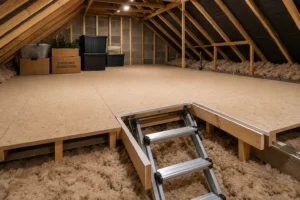
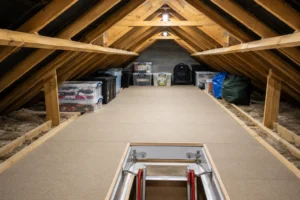
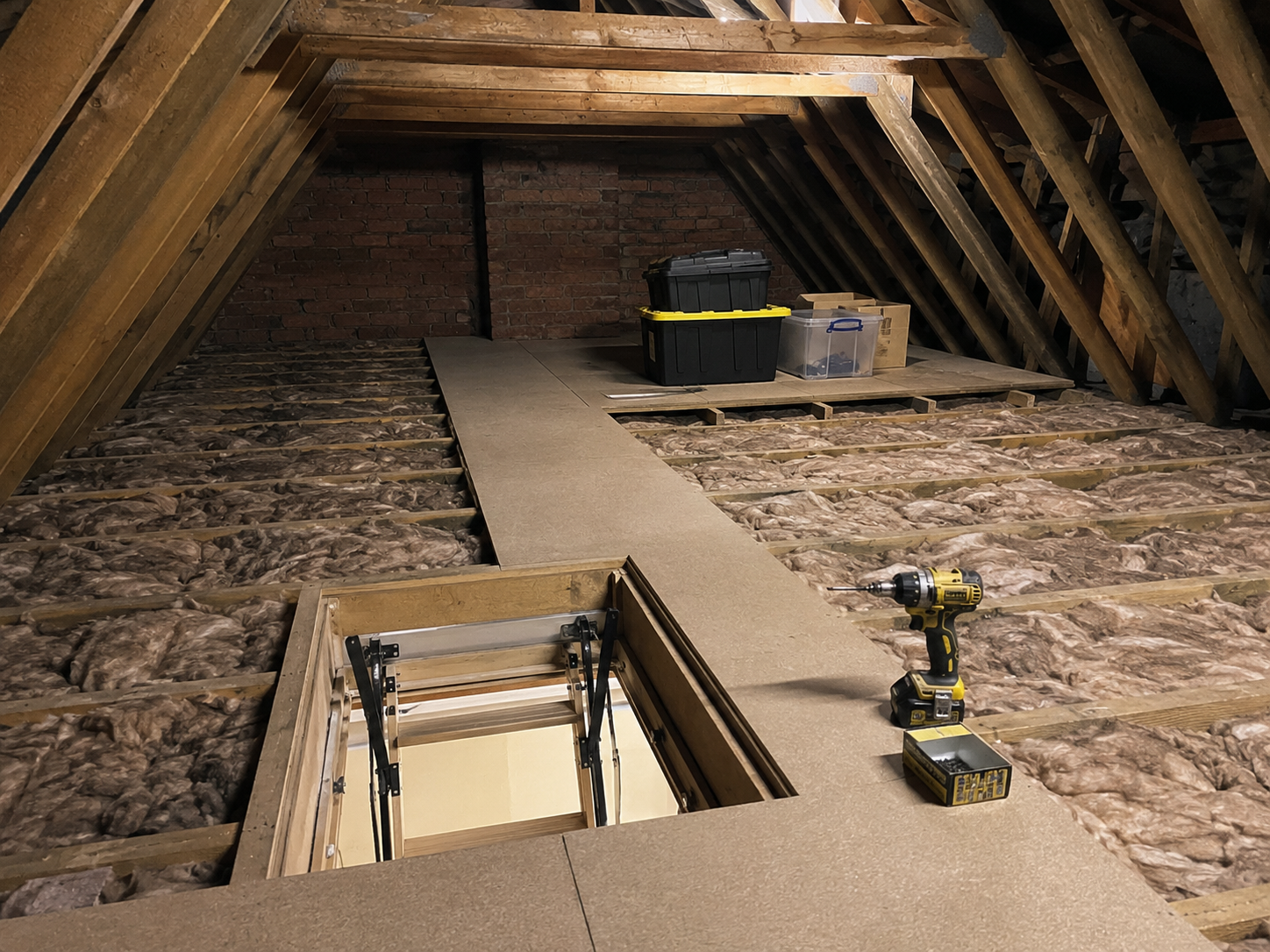
✅ Solution: use a raised loft boarding system (loft legs or sub-frame) to sit above the insulation.
2. Weight Limits and Structural Integrity
Ceiling joists were designed to hold up the plasterboard below—not heavy boxes, furniture, or people. Overloading can crack ceilings or cause structural sagging. Professional loft boarding distributes weight safely across the joists.
3. Ventilation
Your roof needs airflow. Blocking eaves or compressing insulation leads to stagnant, humid conditions where black mould can develop. Always leave airflow gaps around insulation.
New Build Homes and Warranty Considerations
If you live in a new build with a 10-year NHBC warranty, boarding the loft incorrectly can void it. Modern homes often use “fink trusses”—lightweight pre-fabricated roof frames.
✅ Safe loft boarding is still possible but must use specialist, load-bearing raised floors that don’t alter trusses.
Professional Loft Boarding Installation
Professional loft boarding ensures your storage space is safe, energy efficient, and compliant with UK standards. If you are unsure whether your loft is suitable, Your Loft 4 Storage provides expert advice and installation across the Midlands, using raised loft boarding systems that protect insulation, improve storage capacity, and safeguard your home.
FAQ About Loft Boarding Permission
Can I board my loft myself?
Yes, you can board your loft yourself, but it’s important to do it correctly. Standard loft joists are usually designed to support the ceiling below — not heavy storage or regular foot traffic. Installing boards directly onto joists can compress insulation and reduce your home’s energy efficiency.
A professionally installed raised loft boarding system creates a safe storage area while maintaining ventilation and insulation performance. If you are unsure about structural loading, electrical wiring, or safe access, professional installation is recommended.
Can loft boarding void my warranty?
In some cases, yes. Poorly installed loft boarding can affect warranties linked to new-build homes, roofing systems, or insulation products. Directly compressing insulation or blocking airflow may also lead to condensation problems, which could impact certain guarantees.
Using a raised loft boarding system installed to current building standards helps reduce this risk and protects your loft space for long-term use.
Does loft boarding affect home insurance?
Loft boarding itself does not usually affect home insurance, provided it is installed safely and used for normal storage purposes. However, problems caused by incorrect installation — such as structural damage, condensation, or electrical hazards — could potentially affect future claims.
If you plan to use the loft for anything beyond light storage, such as a living area or office, you should always inform your insurer and check whether additional approvals are required.
Is raised loft boarding required?
Raised loft boarding is strongly recommended in most modern homes. Current UK building regulations require adequate loft insulation, typically around 270mm deep. Installing boards directly on top of insulation compresses it and reduces its effectiveness.
Raised systems lift the boards above the insulation layer, helping to maintain airflow, improve energy efficiency, and create a stronger, safer storage platform.
Can I use my loft as a bedroom without approval?
No — not legally. Using a loft as a bedroom usually counts as a loft conversion and requires Building Regulations approval. In many cases, planning permission may also be needed.
A proper loft conversion must meet strict safety standards, including:
- Structural reinforcement
- Fire safety regulations
- Safe staircase access
- Ventilation and insulation requirements
- Emergency escape routes
Standard loft boarding is designed for storage only and should not be used as a habitable room without the correct approvals.