Does Loft Boarding Affect Insulation? Everything Homeowners in Birmingham Need to Know
If you’re considering loft boarding in Birmingham, Coventry, Wolverhampton, or anywhere across the West Midlands, one of the most common questions homeowners ask is: does loft boarding affect insulation?
The short answer is yes—it can, but only if it’s installed incorrectly.
Modern homes rely heavily on loft insulation to reduce heat loss and improve energy efficiency. However, many homeowners also need additional storage space and see their loft as the perfect solution. The challenge is ensuring that your loft remains properly insulated while creating a safe and usable storage area.
In this guide, we’ll explain how loft boarding interacts with insulation, why raised loft boarding systems are important, and how professional installation can help you maximise both storage and energy efficiency.
Why Loft Insulation Is So Important
Around 25% of a home’s heat can escape through an uninsulated roof. Proper loft insulation acts as a barrier that slows heat transfer, helping to keep your home warmer in winter and cooler in summer.
Benefits of adequate loft insulation include:
- Lower energy bills
- Improved energy efficiency
- Reduced carbon emissions
- Increased comfort throughout the home
- Better EPC ratings
Current UK building regulations recommend loft insulation depths of around 270mm for mineral wool insulation. This is significantly thicker than insulation installed in many older properties across Birmingham, Coventry, and Wolverhampton.
The Problem With Traditional Loft Boarding
Years ago, many homeowners simply screwed loft boards directly onto the ceiling joists.
While this may seem like a straightforward solution, it often causes several issues.
Compression of Insulation
When boards are laid directly on top of insulation, the insulation becomes compressed.
Compressed insulation loses much of its thermal performance because the trapped air within the material is reduced. Since insulation works by trapping air, squeezing it down can significantly decrease its effectiveness.
Reduced Energy Efficiency
Poorly installed loft boarding can create cold spots and increase heat loss throughout the property.
This can result in:
- Higher heating bills
- Reduced comfort levels
- Increased energy consumption
Ventilation Issues
Directly boarding over insulation can also restrict airflow within the loft.
Without adequate ventilation, moisture can build up, potentially leading to:
- Condensation
- Damp problems
- Timber deterioration
- Mould growth
This is particularly important in properties throughout the West Midlands, where seasonal temperature changes can create condensation risks within loft spaces.
How Modern Loft Boarding Protects Insulation
The good news is that modern loft boarding systems are specifically designed to work alongside insulation rather than against it.
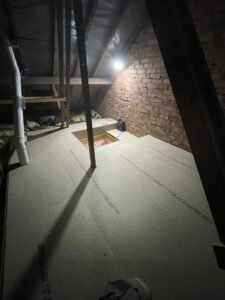
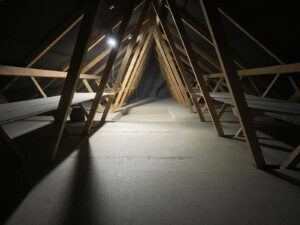
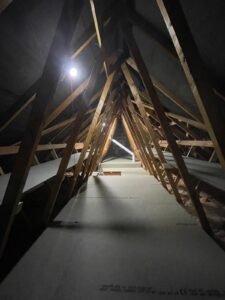
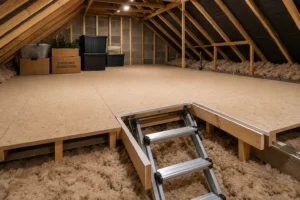
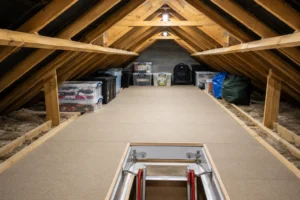
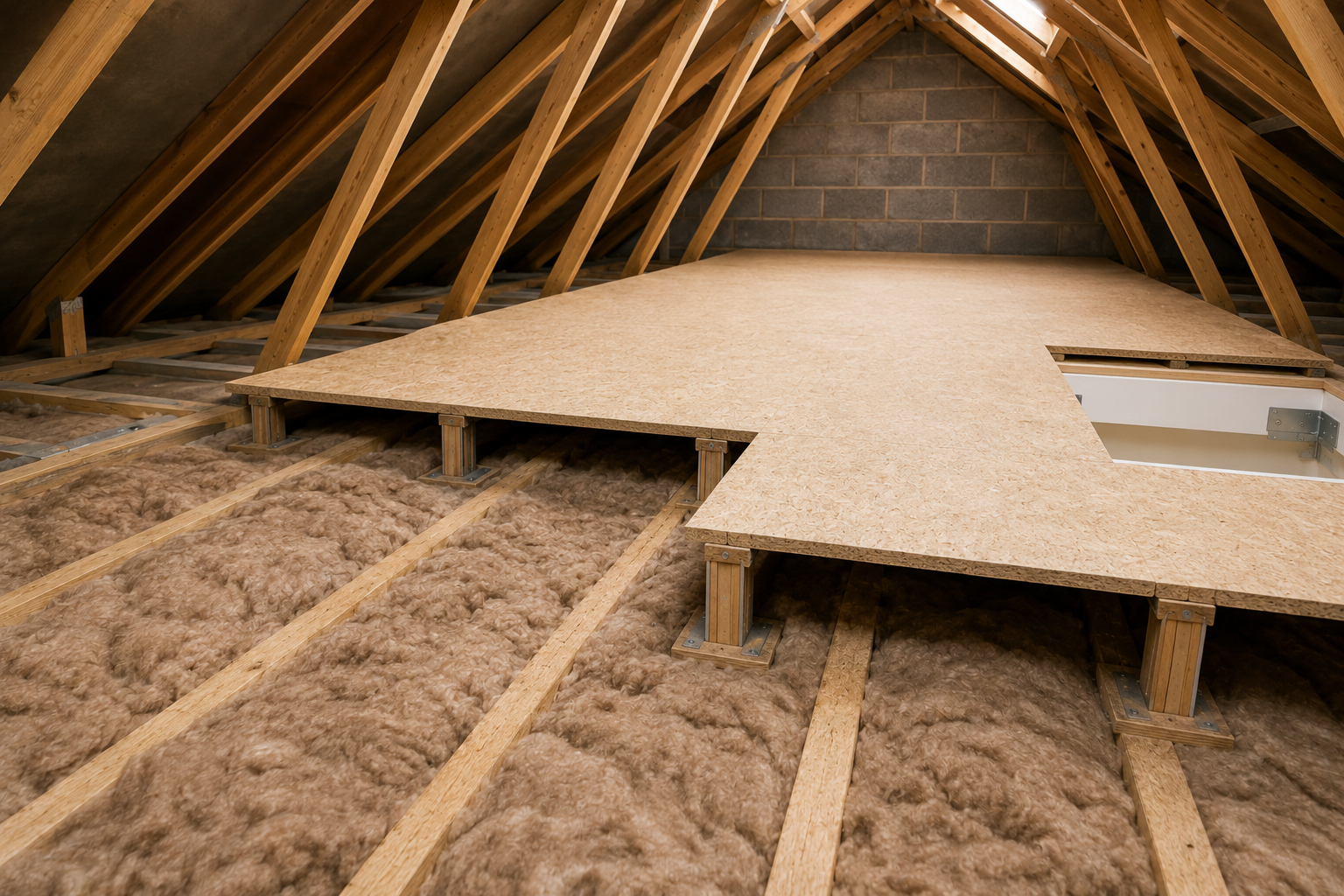
Professional installers use raised loft boarding systems that create a gap between the insulation and the loft boards.
This allows the insulation to maintain its full depth and performance while providing a solid platform for storage.
Raised Loft Boarding Systems
A raised loft boarding system uses specially designed supports fitted above the existing ceiling joists.
The loft boards are then secured to these supports, creating a raised deck above the insulation layer.
Benefits include:
- No compression of insulation
- Improved airflow
- Better thermal efficiency
- Increased storage capacity
- Compliance with modern building standards
For homeowners seeking loft boarding Birmingham, this is generally considered the most effective and future-proof solution.
Does Raised Loft Boarding Improve Energy Efficiency?
While loft boarding itself does not increase insulation performance, raised loft boarding helps preserve the effectiveness of existing insulation.
By preventing compression, the insulation can continue to perform as intended.
Many homeowners notice:
- More consistent room temperatures
- Reduced heat loss
- Improved energy efficiency
- Better use of loft space
When combined with upgraded insulation, raised loft boarding can form an important part of an energy-efficient home improvement strategy.
Loft Boarding and New Build Homes
Many new-build homes in Coventry, Wolverhampton, and across the West Midlands include substantial amounts of loft insulation to meet modern energy standards.
Installing traditional loft boards directly onto the joists can sometimes interfere with these standards and may even affect developer warranties in certain circumstances.
Professional raised loft boarding systems are often recommended because they allow homeowners to create storage space without compromising insulation performance.
If you own a new-build property, it’s always worth checking your warranty requirements before carrying out any loft modifications.
Signs Your Existing Loft Boarding May Be Affecting Insulation
If your loft was boarded many years ago, there may be signs that the insulation has been compromised.
Common indicators include:
- Loft boards sitting directly on ceiling joists
- Visible compressed insulation
- Uneven temperatures throughout the home
- High heating bills
- Damp or condensation in the loft
- Mould around roof timbers
A professional loft inspection can help identify whether your current setup is causing problems.
Why Professional Installation Matters
Proper loft boarding is about much more than simply laying boards across the loft floor.
An experienced installer will assess:
- Existing insulation levels
- Ventilation requirements
- Structural considerations
- Load-bearing capacity
- Access arrangements
- Long-term storage needs
A professionally installed raised system ensures that your loft remains energy efficient while providing a strong and secure storage platform.
Whether you’re looking for loft boarding Coventry, loft boarding Wolverhampton, or loft boarding Birmingham, choosing an experienced specialist can help avoid costly mistakes and ensure the loft performs as intended.
Combining Loft Boarding, Insulation and Loft Ladders
Many homeowners choose to upgrade several aspects of their loft at the same time.
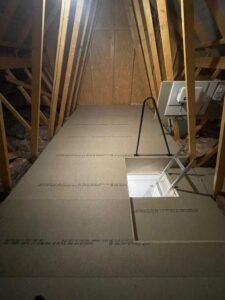
A complete loft storage solution often includes:
- Raised loft boarding
- Additional loft insulation
- Loft ladder installation
- Loft hatch enlargement
- Loft lighting
By completing these improvements together, homeowners can create a safe, accessible and highly practical storage space without compromising energy efficiency.
Conclusion
So, does loft boarding affect insulation?
Yes—but only when installed incorrectly.
Traditional boarding methods can compress insulation, reduce energy efficiency and increase the risk of condensation. However, modern raised loft boarding systems are specifically designed to protect insulation while creating valuable storage space.
If you’re considering loft boarding in Birmingham, loft boarding Coventry, loft boarding Wolverhampton, or anywhere across the West Midlands, a professionally installed raised loft boarding system is usually the best way to maximise storage while maintaining your home’s energy performance.
By combining proper insulation, ventilation and quality loft boarding, you can enjoy a warmer, more efficient home and make the most of every inch of available loft space.