Before Boarding Your Loft in Coventry: 7 Things to Check
Turning an unused loft into practical household storage can make a significant difference to the amount of space available elsewhere in your home.
However, good loft storage starts before the first board is fitted.
Insulation depth, headroom, the existing hatch, roof structure and even the position of pipes and cables can affect how much of the loft should be boarded and where the most useful storage area should be created.
If you are planning to improve your loft in Coventry, here are seven things worth checking before deciding on the final layout.
1. Check the Existing Loft Insulation
One of the first things to inspect is the depth and condition of the insulation.
In many lofts, insulation extends above the ceiling joists. In this situation, simply fixing boards directly over the joists can compress the insulation underneath.
That is why a raised storage platform may be required.
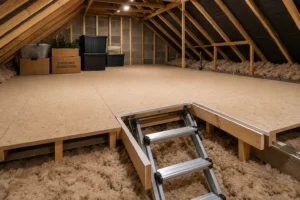
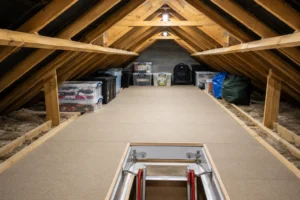
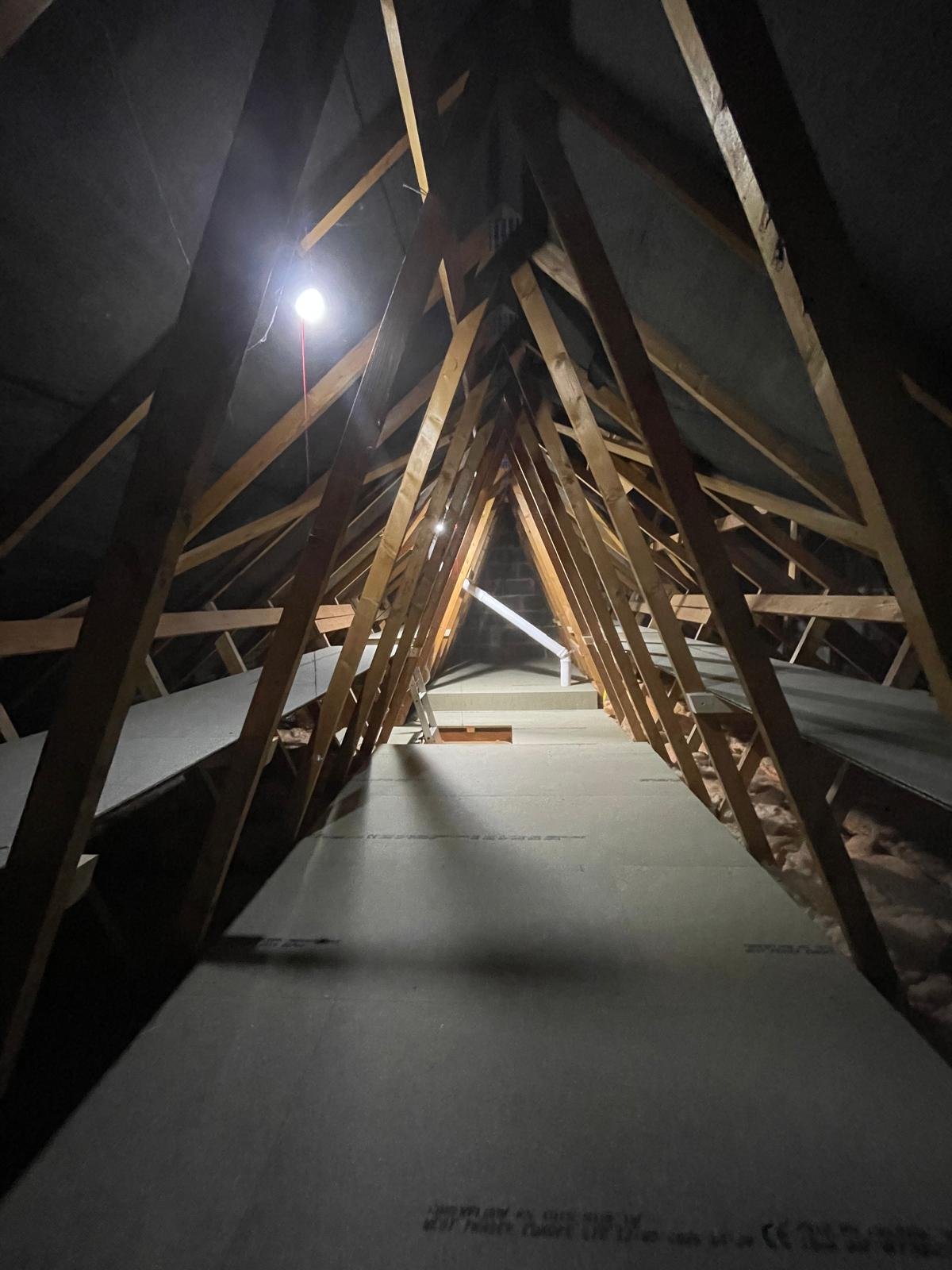
A raised system creates clearance between the insulation and the boarded floor, allowing the insulation to remain at its intended depth while creating a separate surface for household storage.
The required arrangement depends on the individual loft, so it is worth checking the insulation before deciding how much boarding you need.
For a more detailed explanation, read our guide to how loft boarding can affect insulation.
2. Find the Part of the Loft That Is Actually Useful
It can be tempting to measure the complete loft floor and assume that the entire area should be boarded.
In practice, that is rarely necessary.
Some sections may have:
- very limited headroom
- roof trusses passing through the space
- water tanks or other equipment
- pipework
- electrical cables
- difficult access
- areas that need to remain available for maintenance
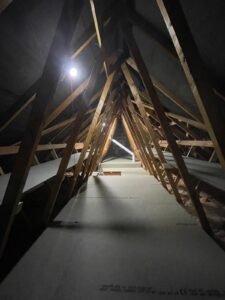
A well-planned central storage platform can therefore be considerably more useful than covering every possible corner.
Think about what you actually want to store and where you will be able to reach those belongings comfortably.
For boxes, suitcases, Christmas decorations and other occasional household items, a clearly defined storage zone may provide everything you need.
3. Look at the Route From the Loft Hatch
The boarded area should not be considered separately from the way you enter the loft.
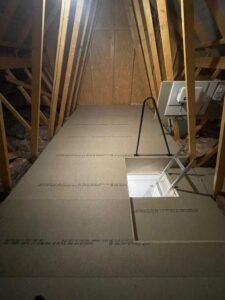
Ideally, you should be able to climb through the hatch and reach a stable storage platform without negotiating an awkward gap or stepping around insulation.
The position of the hatch can therefore influence the entire boarding layout.
When planning the storage area, consider:
- where you enter the loft
- where your first step will be
- whether there is enough headroom above the hatch
- how easily boxes can be carried through the opening
- how you will move from the hatch to the storage area
If the existing access is awkward, it may make sense to improve it as part of the same project.
4. Decide Whether You Need a Better Loft Ladder
A loft may have plenty of storage potential but still be frustrating to use if access depends on bringing a separate ladder upstairs every time.
For households that expect to use the loft regularly, a permanently fitted loft ladder can make access far more convenient.
The right ladder depends on factors such as:
- hatch dimensions
- floor-to-ceiling height
- available landing space
- space inside the loft
- how frequently the loft will be accessed
There are different folding, sliding and timber options available, so the ladder should be selected around the property rather than simply choosing one based on appearance.
You can see more information about our loft ladder installation options.
Where both ladder and boarding are required, it is sensible to plan them together so that the ladder leads naturally onto the storage platform.
5. Check Whether the Existing Loft Hatch Is Suitable
The ladder is only one part of loft access.
An existing hatch may be perfectly adequate, but smaller or awkwardly positioned openings can make carrying storage boxes into the loft unnecessarily difficult.
Before replacing anything, consider:
- the existing opening dimensions
- where the hatch is positioned
- whether the opening provides comfortable access
- whether it will accommodate the intended ladder
- the available ceiling space around it
Depending on the property, an existing opening may be retained or a different loft hatch solution may be more practical.
There is no reason to replace a suitable hatch simply because the loft is being boarded.
6. Do Not Forget Ventilation, Cables and Pipework
Creating a tidy storage floor should not mean hiding everything underneath it.
Lofts often contain services that may need to remain accessible, including electrical wiring, pipework and other equipment.
Existing ventilation also needs to be considered.
Before the platform is installed, the layout should identify areas that should remain accessible rather than simply covering the largest possible floor area.
This is another reason why a carefully planned storage platform can be better than automatically boarding the entire loft.
Good loft storage should work around the property rather than make future maintenance more difficult.
7. Think About Lighting Before Filling the Loft With Boxes
Natural light in many lofts is limited.
A single light near the hatch may allow you to enter the loft, but it may not provide enough visibility to find items stored farther away.
If the loft is going to be used regularly, consider where lighting would be most useful.
This could include:
- around the hatch
- above the main storage platform
- along the access route
- around frequently used storage areas
Planning loft lighting before the storage space is filled can make the finished loft considerably easier to use.
Should You Board the Entire Loft?
Not necessarily.
More boarding does not automatically mean better storage.
The most useful area is usually where there is reasonable headroom, straightforward access and enough room to organise belongings.
Low areas near the eaves may technically provide additional floor space but can be inconvenient to reach.
Instead of starting with the question, “How many square metres can we board?”, it is often better to ask:
“How much accessible storage do we actually need?”
This approach can produce a cleaner and more practical layout without installing flooring in areas that are unlikely to be used.
Raised Loft Boarding and Existing Insulation
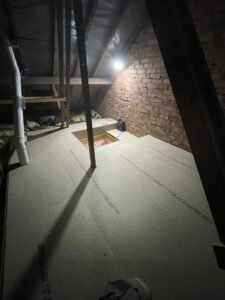
If your insulation is deeper than the ceiling joists, a raised system can create a storage platform above it rather than pressing boards directly onto the insulation.
This is particularly important when you want to retain the existing insulation while improving the usability of the loft.
The correct height should be determined from the insulation depth and the structure of the individual loft.
You can find more information about the installation method on our main raised loft boarding page.
What About Newer Homes?
A newer property can still benefit from loft storage, but the existing insulation, roof structure and any applicable warranty requirements should be checked before modifications are made.
This is particularly relevant where substantial insulation has already been installed above joist level.
Rather than removing or compressing the insulation simply to create a flat floor, an appropriate raised system may allow a storage platform to be created above it.
If your property is covered by a developer or structural warranty, check its terms before carrying out alterations.
Loft Boarding Is for Storage, Not a Habitable Room
There is an important distinction between boarding a loft for household storage and converting it into living accommodation.
A standard boarded storage area does not turn the loft into a bedroom, office or other habitable room.
If the intention is to create living accommodation, a proper loft conversion involves separate structural and regulatory considerations.
For ordinary household storage, however, a properly planned platform can make an otherwise difficult roof space far easier to organise and access.
How Much Loft Boarding Do You Need?
There is no standard answer.
The appropriate amount depends on:
- the dimensions of the loft
- available headroom
- roof structure
- insulation depth
- the location of the hatch
- what you intend to store
- pipes, cables and other obstructions
- your budget
Some homeowners only need a compact storage area. Others may benefit from a substantially larger platform.
A survey allows these factors to be assessed before the layout and quotation are agreed.
For a detailed explanation of the factors affecting price, see our loft boarding cost guide.
Planning Loft Storage in Coventry
Homes do not all have identical lofts, even when properties appear similar from the outside.
Before recommending a storage layout, it makes sense to inspect the loft itself and consider the insulation, roof structure, access and amount of usable floor area.
Your Loft 4 Storage provides professional loft boarding in Coventry, including raised storage platforms and related access improvements.
Depending on what your loft requires, the project can also include a suitable ladder, hatch, insulation improvements or lighting.
The aim is not to board as much space as possible. It is to create a practical storage area that works properly with the loft you already have.
Frequently Asked Questions
Do I need raised loft boarding?
If the existing insulation extends above the ceiling joists, a raised system may be required to provide clearance above it. The appropriate arrangement depends on the insulation depth and loft structure.
Can my existing loft insulation stay in place?
Often, yes. The insulation should be assessed before the boarding system is specified. A raised platform can allow storage flooring to be created without simply compressing insulation underneath it.
Should I install the loft ladder before boarding?
Where both are being installed, it is usually better to plan the ladder, hatch and boarded area together. This helps create a practical route from the opening onto the storage platform.
Do I have to board my entire loft?
No. A defined storage platform may be more practical than boarding low or obstructed areas that are unlikely to be used.
Can I use a boarded loft as a bedroom?
Standard loft boarding is intended to create household storage and access. It does not constitute a habitable loft conversion.
Can you install loft boarding and a ladder together in Coventry?
Yes. Where both improvements are suitable for the property, boarding and loft access can be planned as one project.
Considering Loft Boarding in Coventry?
If you are running out of storage space, the loft may provide a practical solution, but the best layout should be based on the property itself.
Your Loft 4 Storage can assess the insulation, access, structure and usable storage area before recommending the appropriate boarding arrangement.
Find out more about our loft boarding service in Coventry or arrange a free home survey.
Call 0800 193 5051 or contact our team to discuss your loft.